Biomass Atlas
Aboveground Biomass Under Management Scenarios
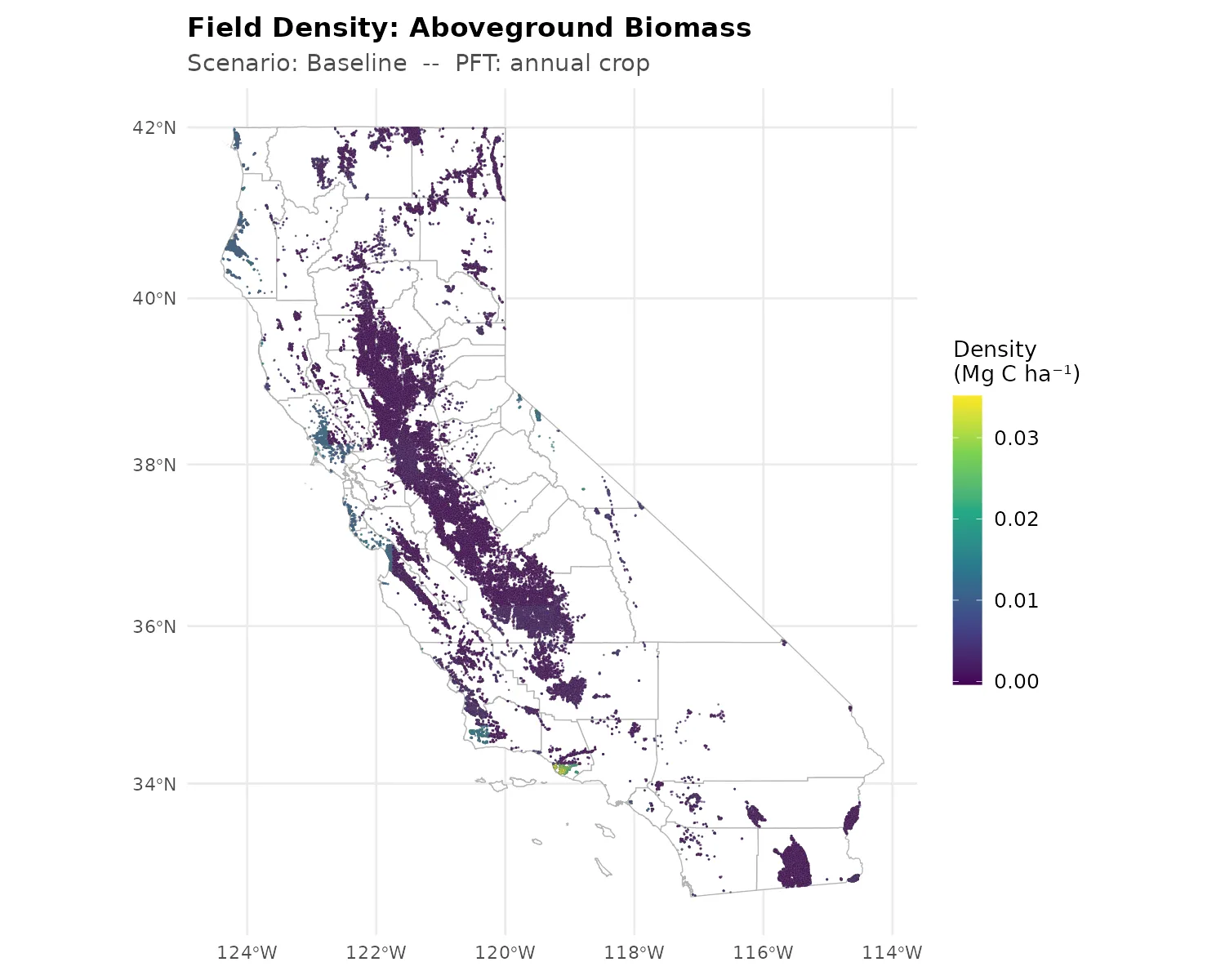
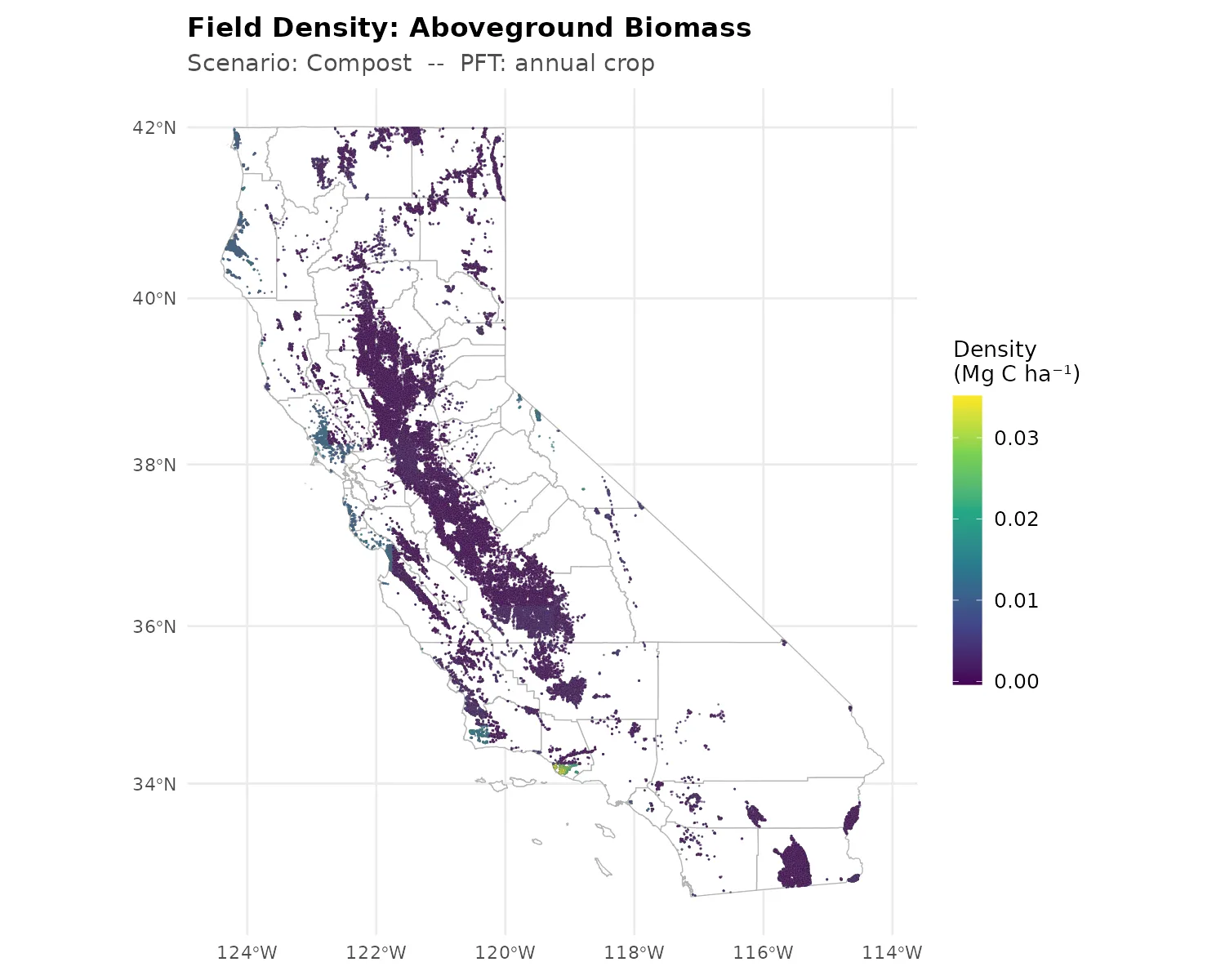
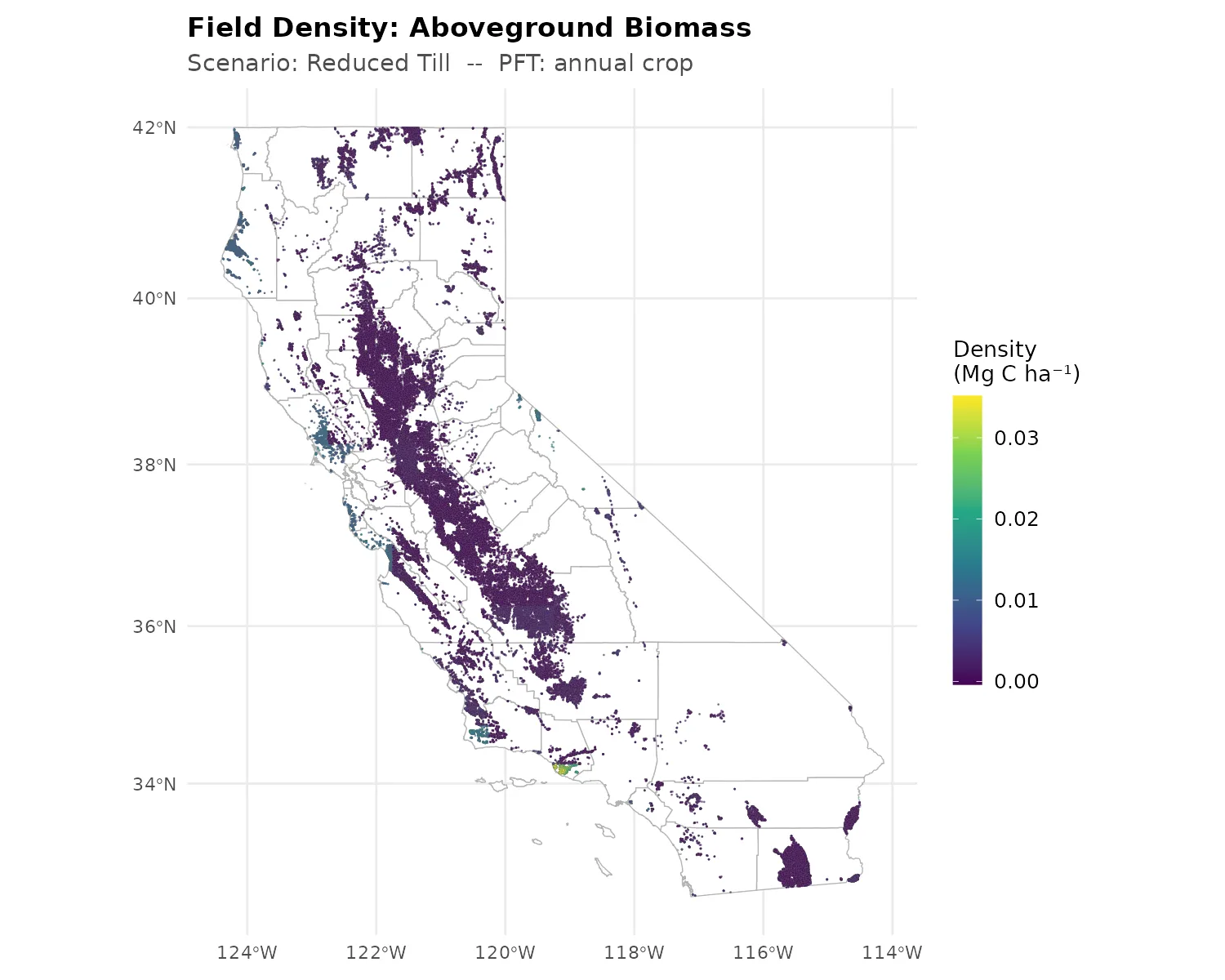
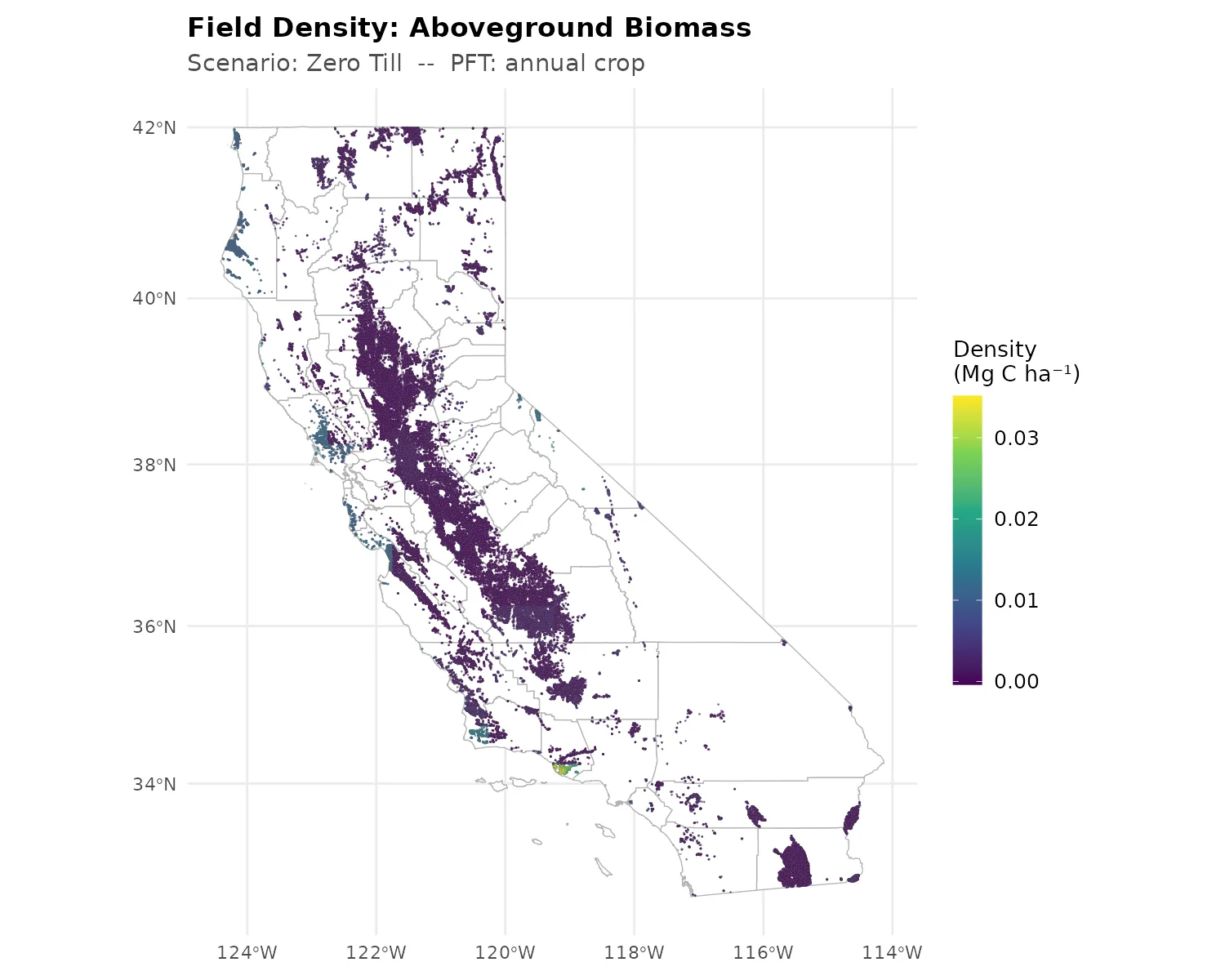
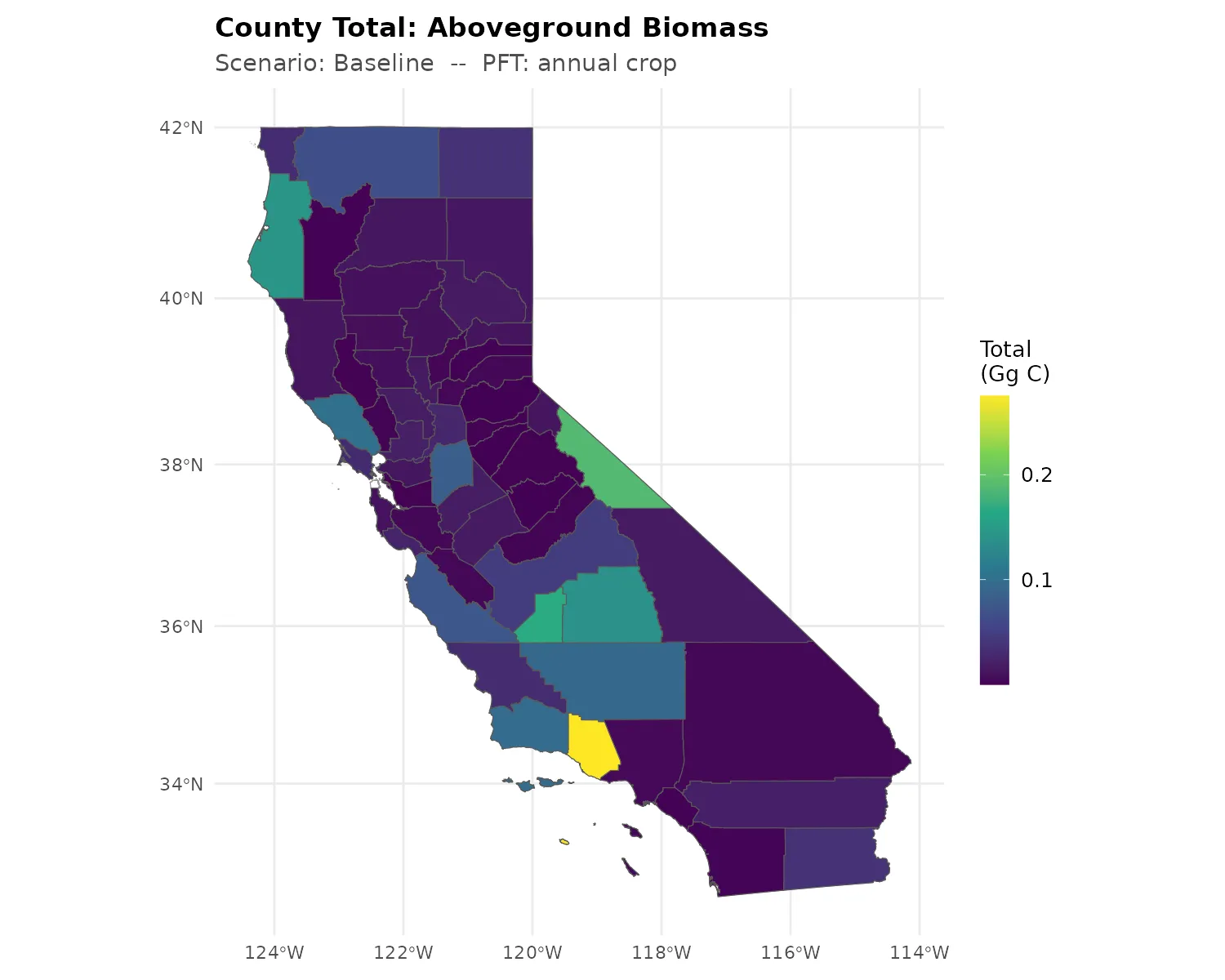
Aboveground biomass (AGB) represents the total mass of living plant material above the soil surface – stems, leaves, and reproductive structures. For annual crops, AGB is a snapshot of standing biomass at the modeled time point. Because these are harvested crops, end-of-season AGB values are typically small. See the Scenario Definition Table for practice parameters and simulation details.
These results are from a proof-of-concept modeling framework that has not been validated against field observations. Interpret all values as illustrative projections, not empirical estimates.
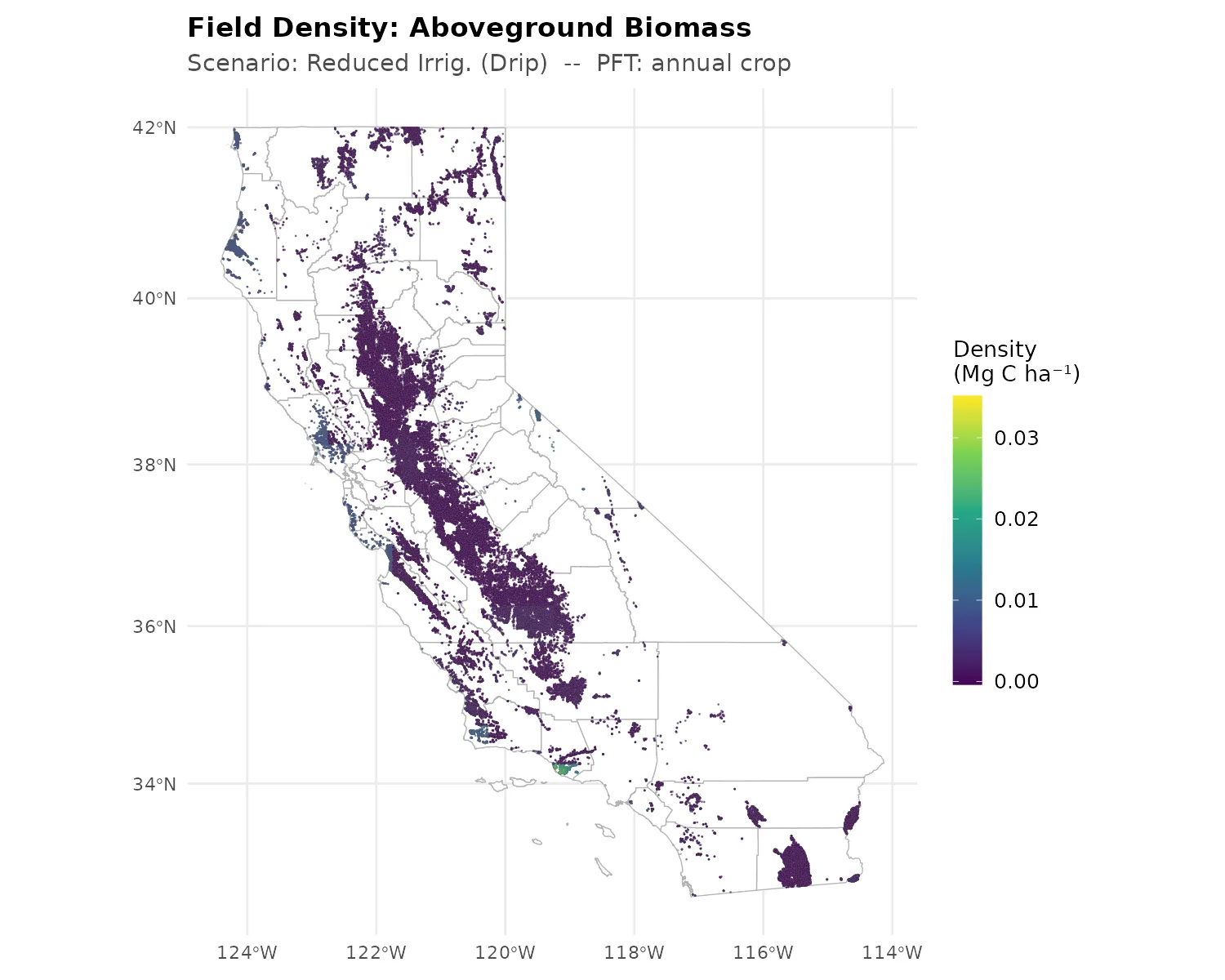
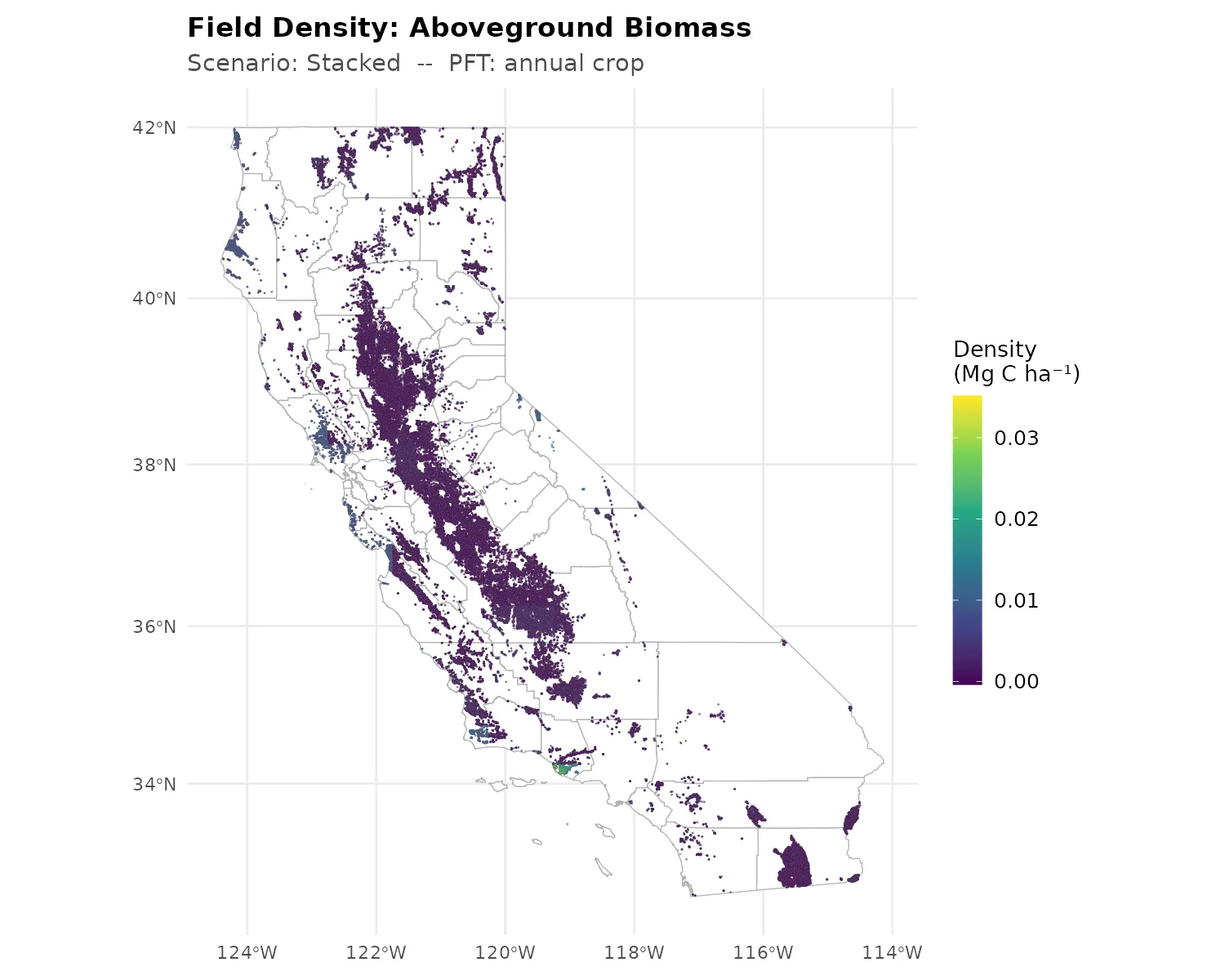
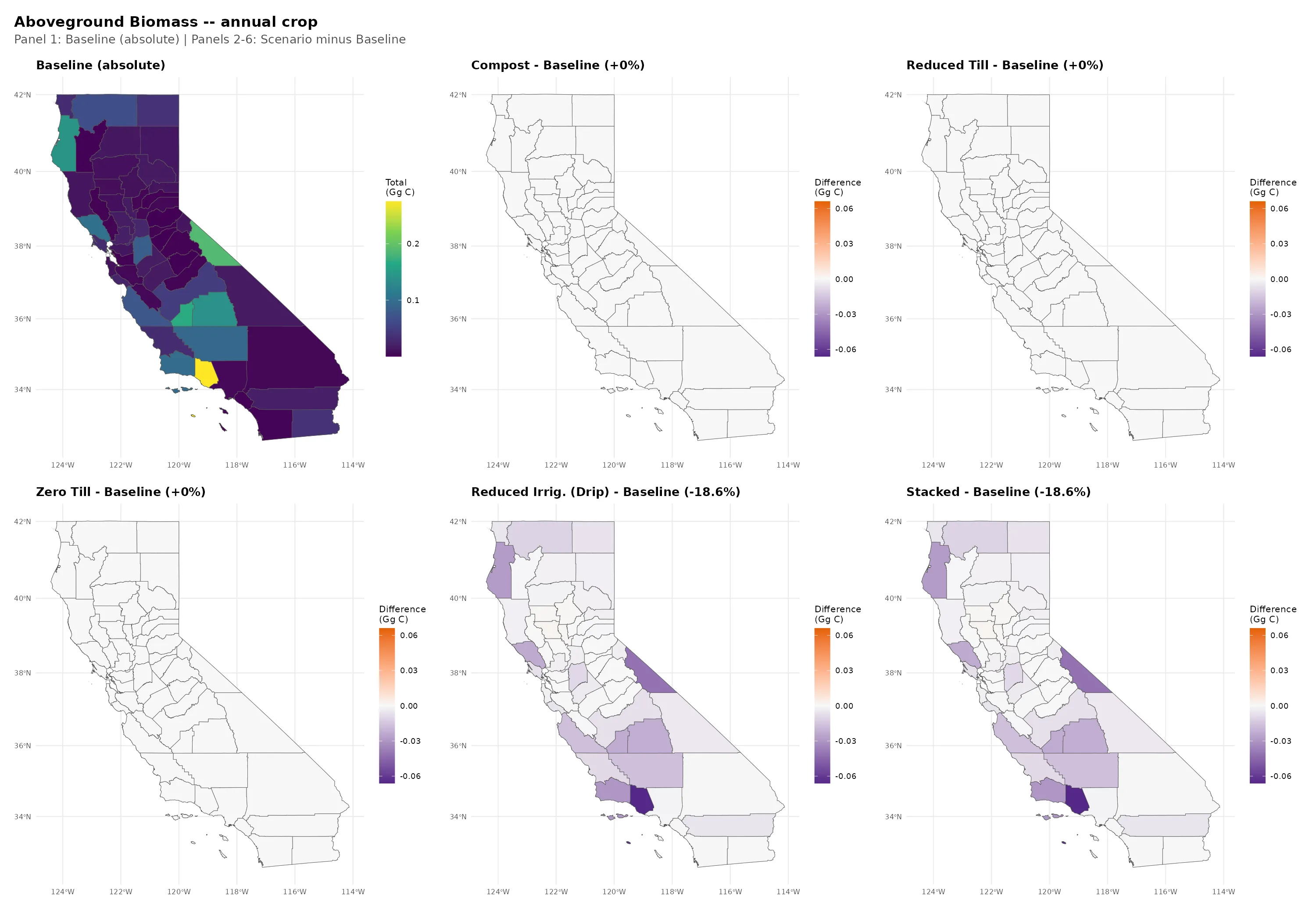
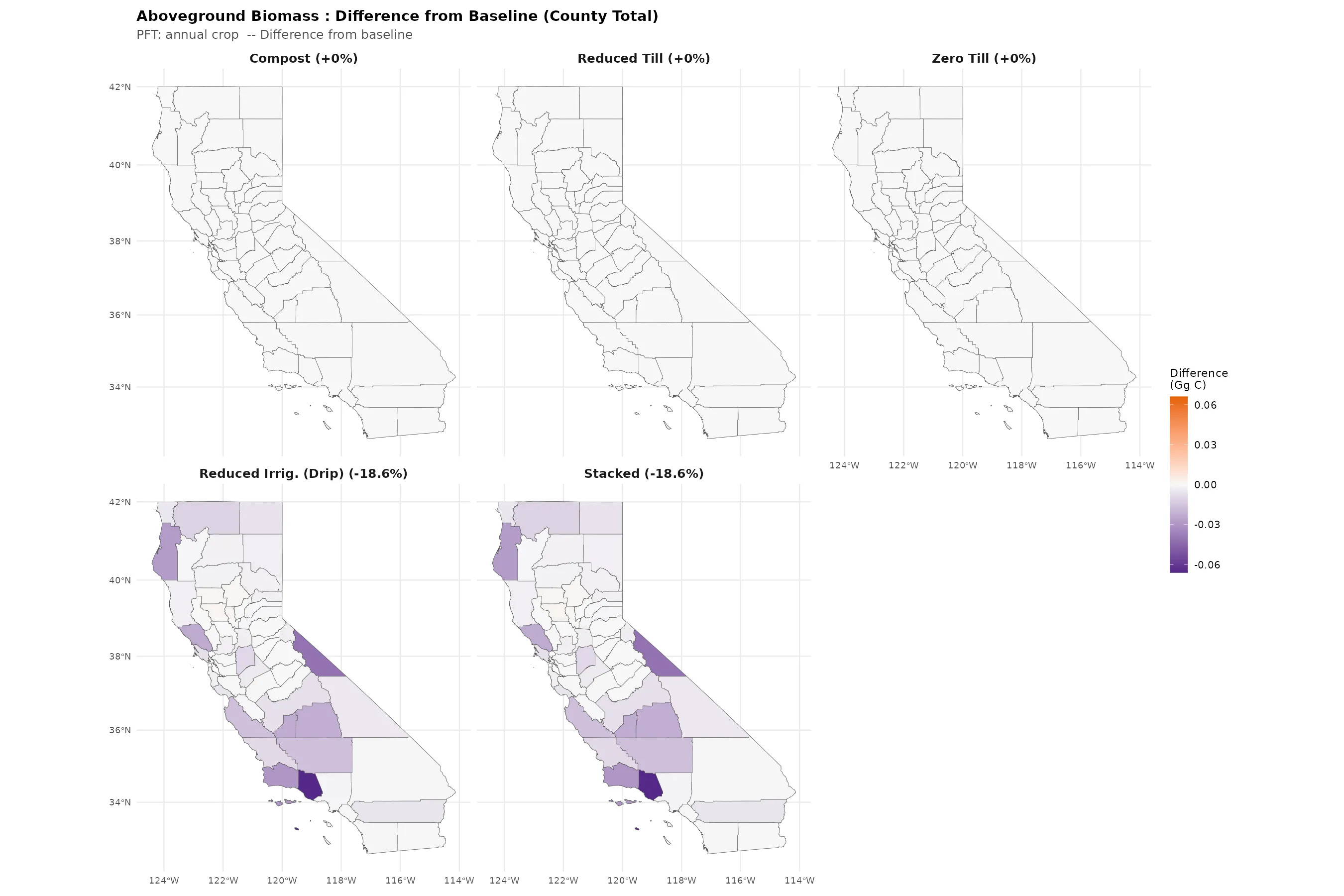
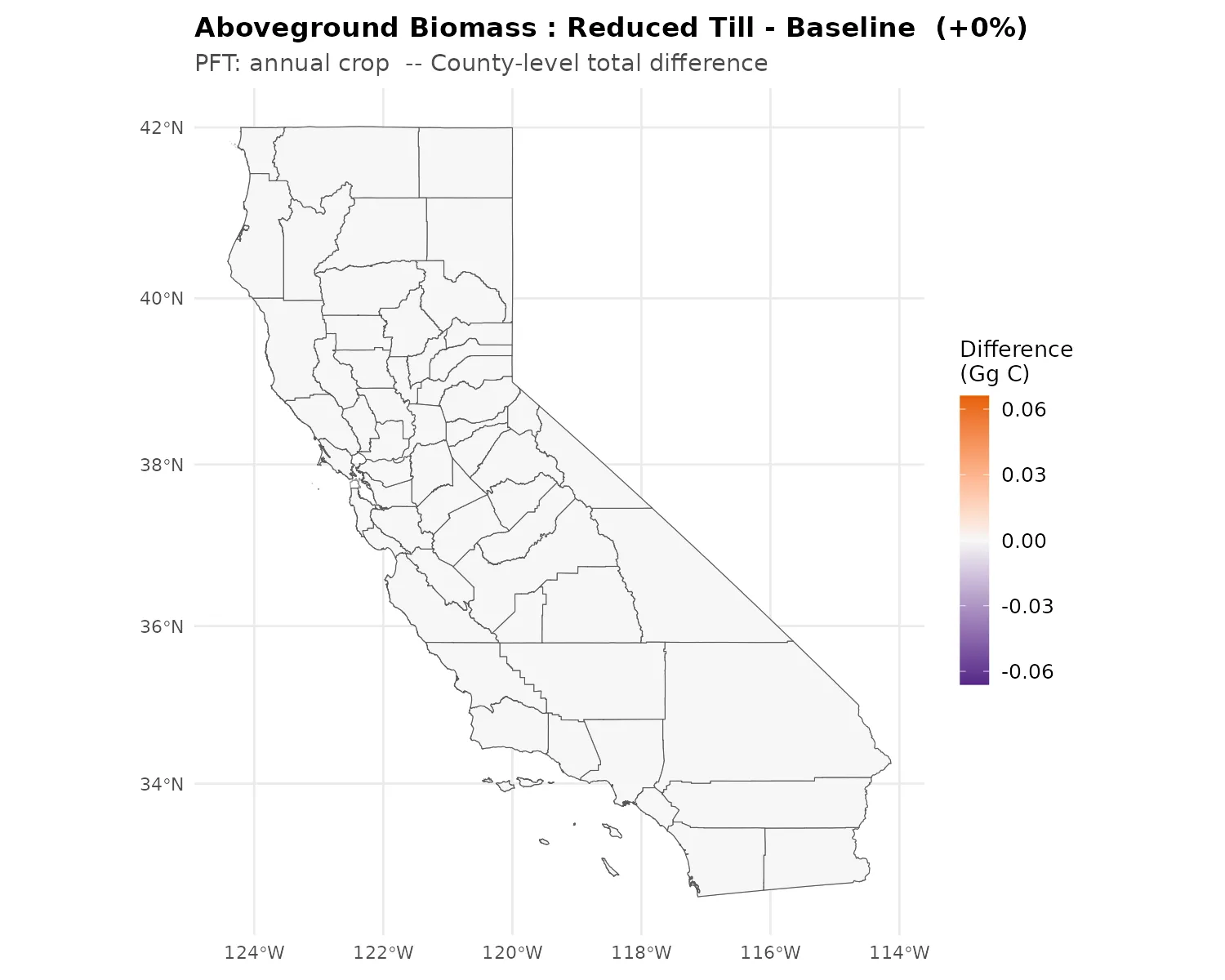
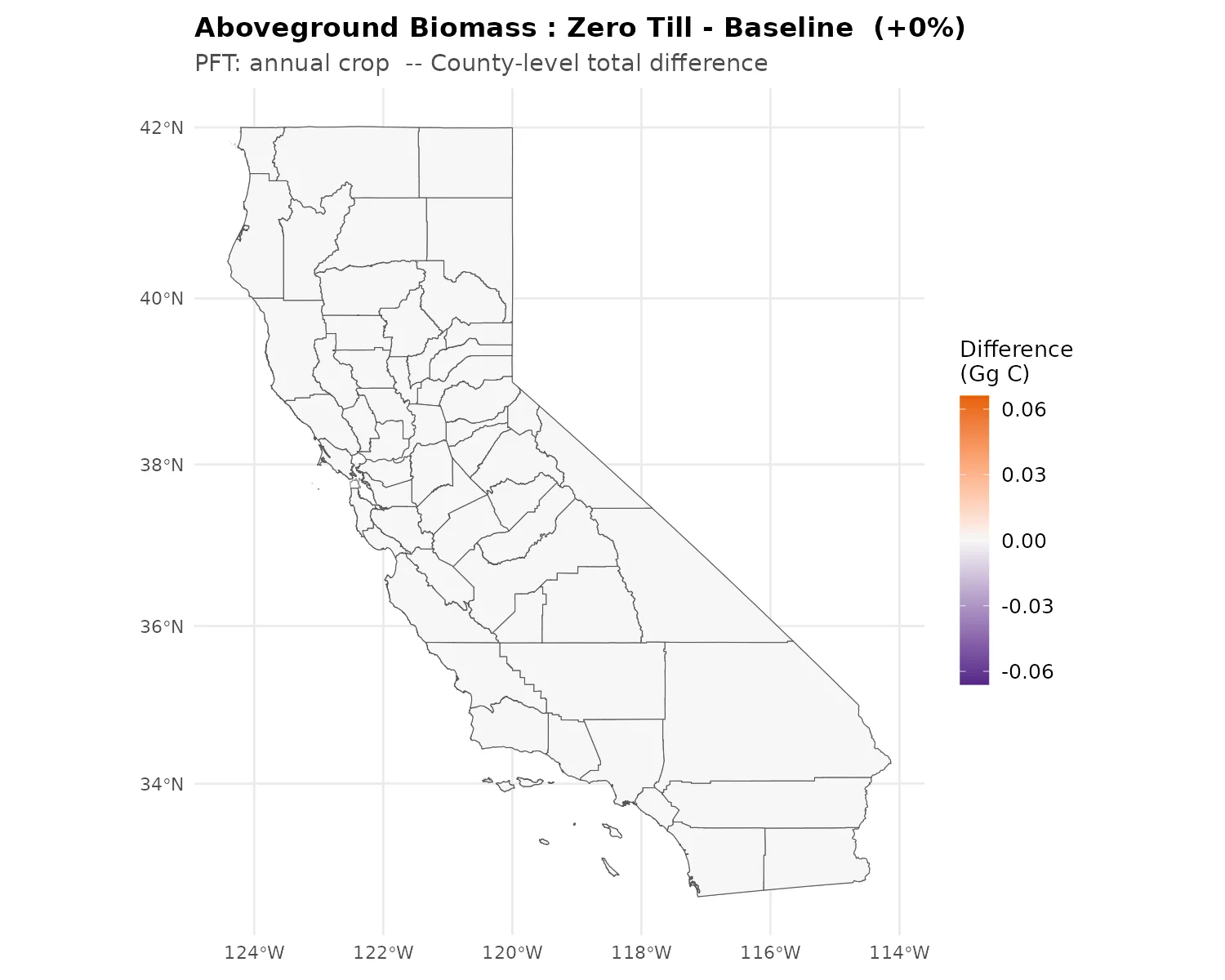
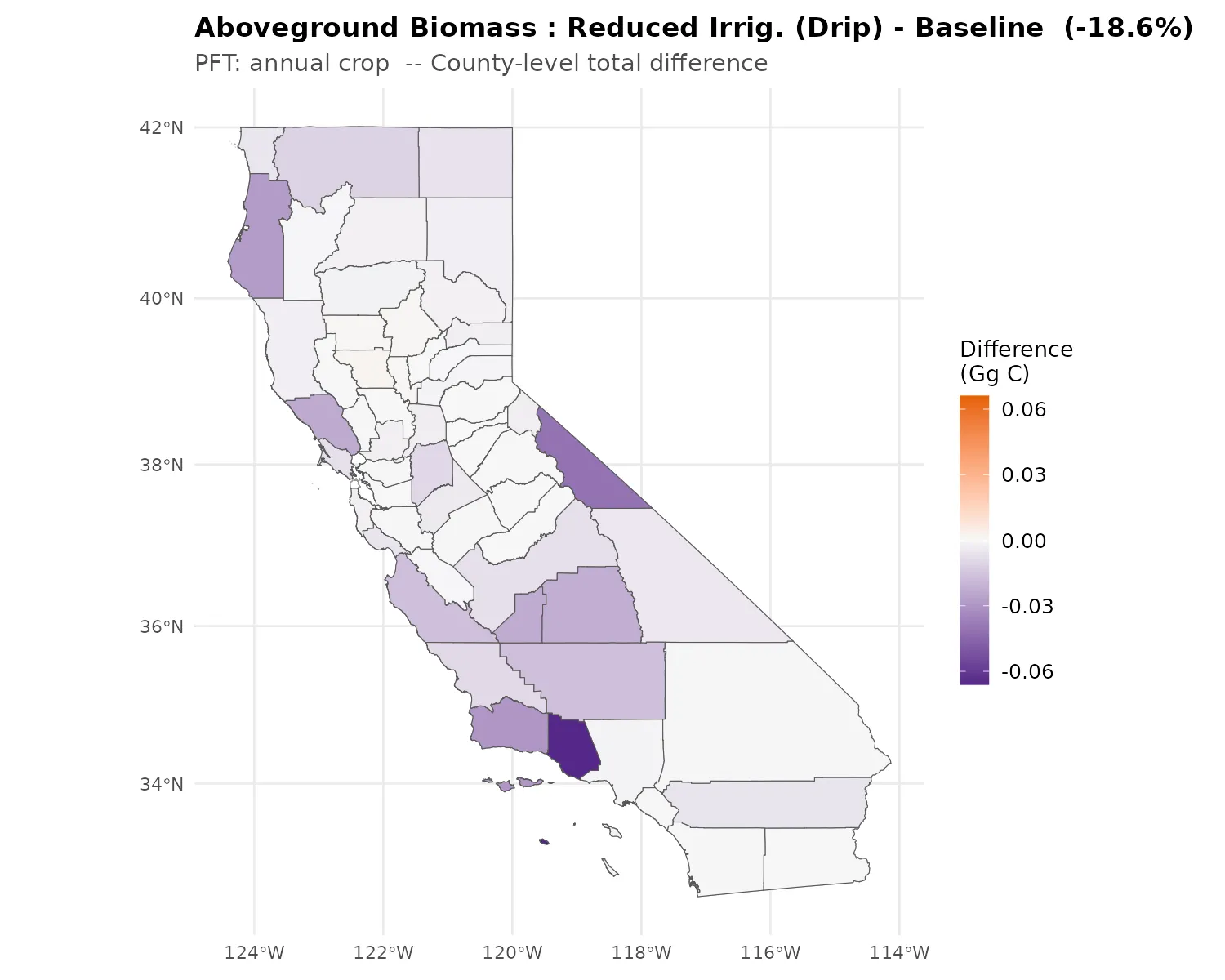
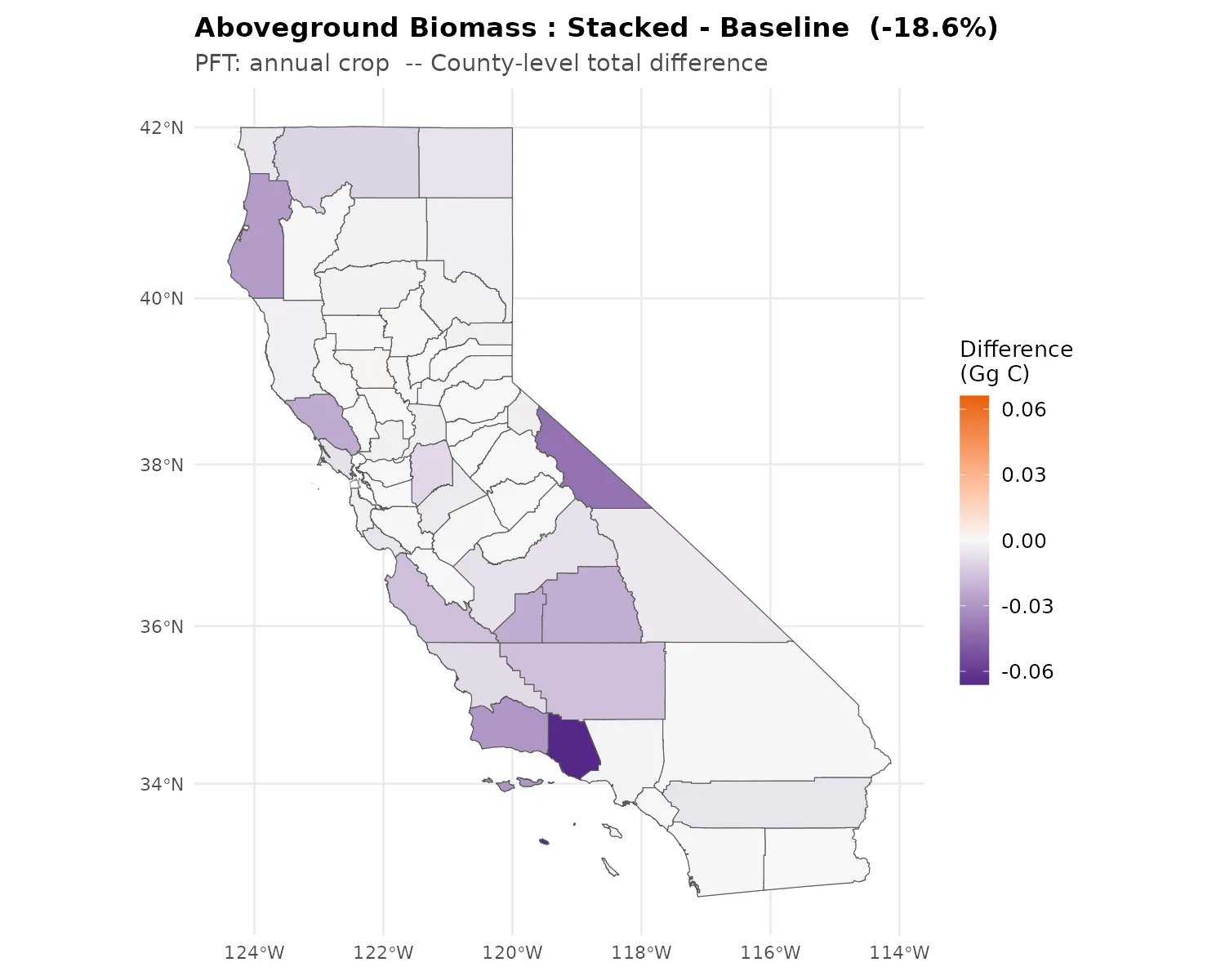
AGB in annual croplands reflects biomass remaining after harvest. Statewide totals are very small (~40 Mg total across all fields) compared to soil carbon pools (~112 Tg C). For tillage and compost scenarios, AGB differences from baseline are effectively zero (0.0%), confirming that these management practices do not alter crop standing biomass in SIPNET. Drip irrigation and stacked scenarios show a -18.6% AGB reduction, reflecting altered water availability affecting end-of-season residue. AGB is most useful as an indicator of crop productivity differences and residue availability for soil carbon cycling.
County-Level Aboveground Biomass
Mixed Comparison: Baseline + Scenario Differences
All Scenarios Side-by-Side
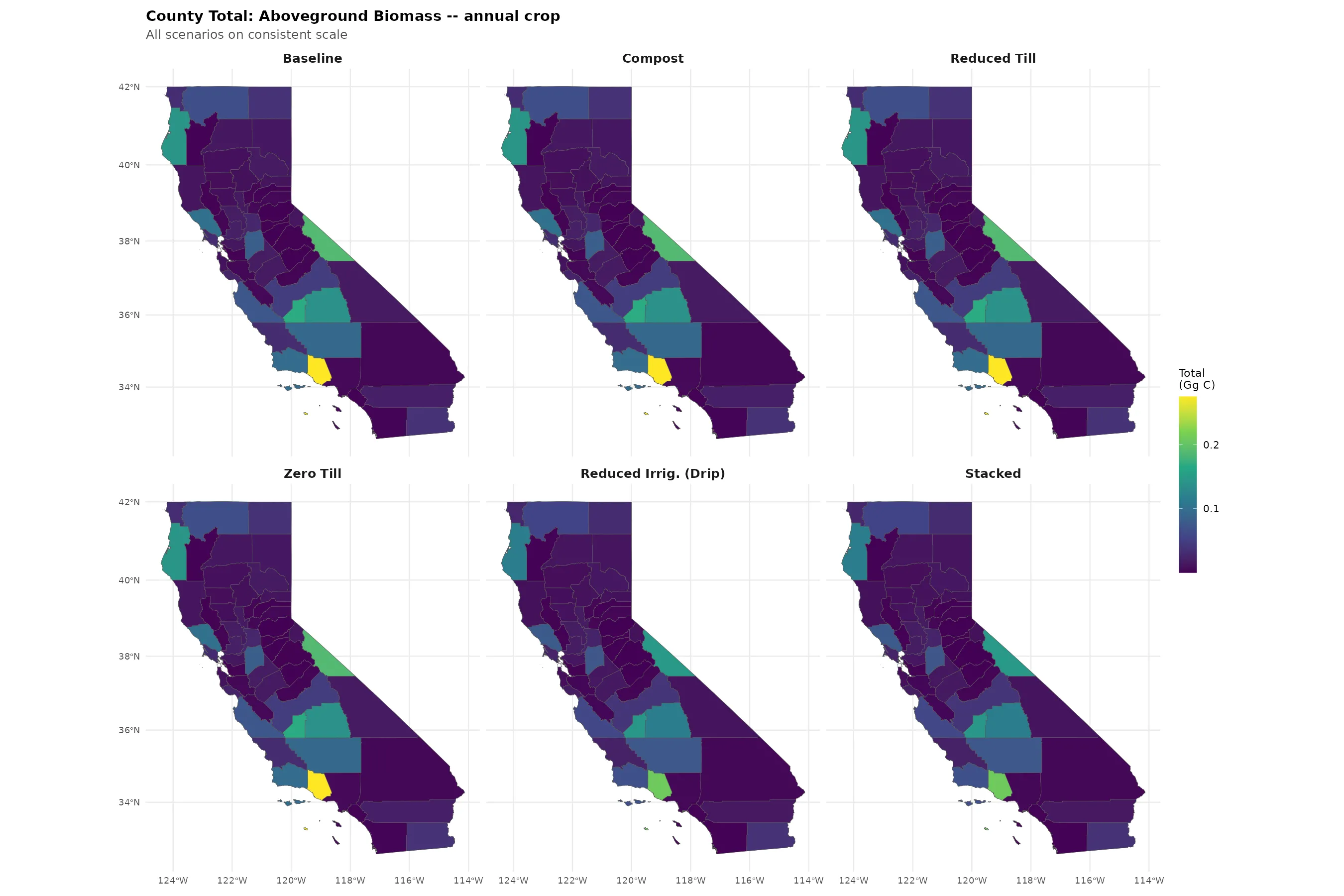
Individual AGB Scenarios
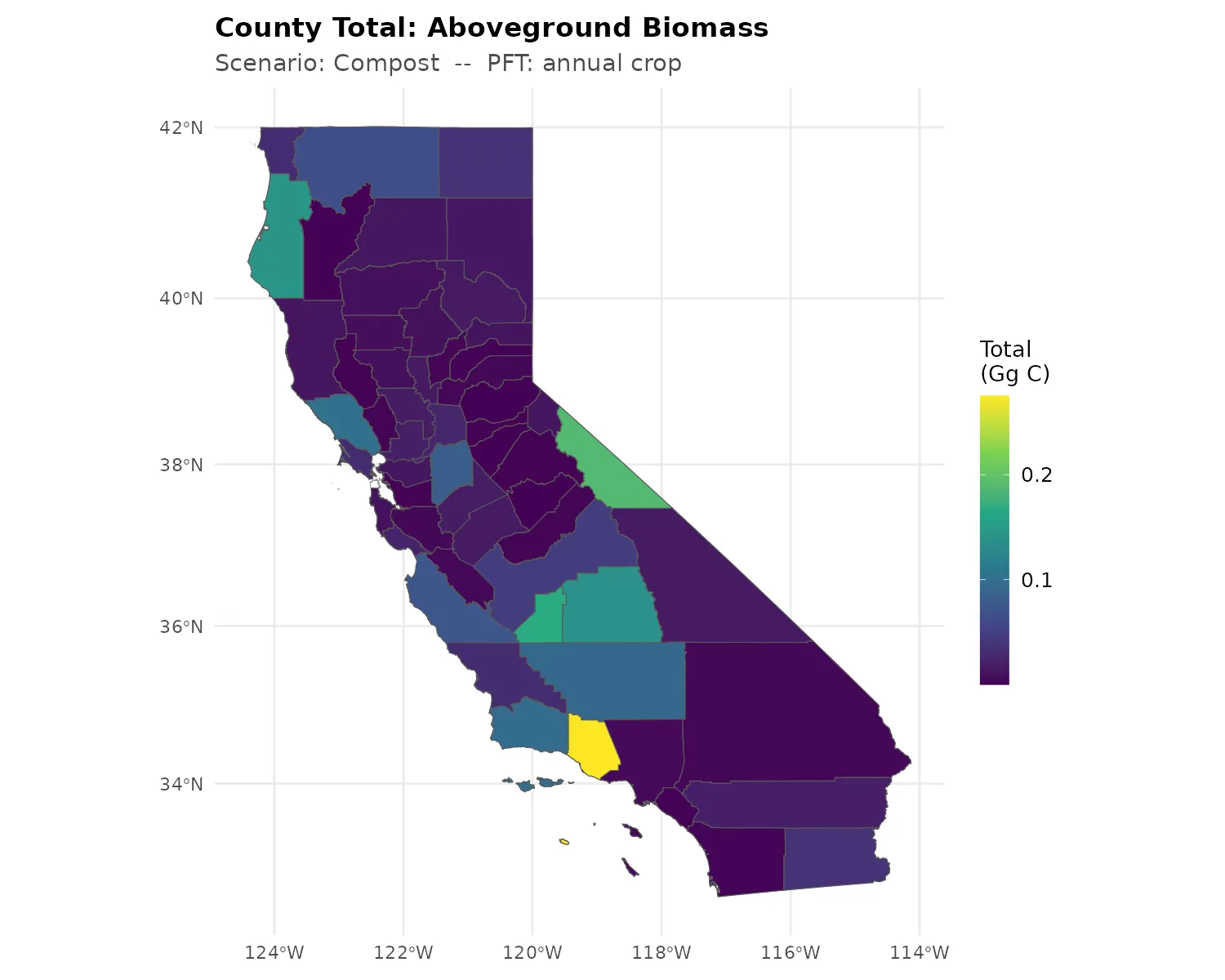
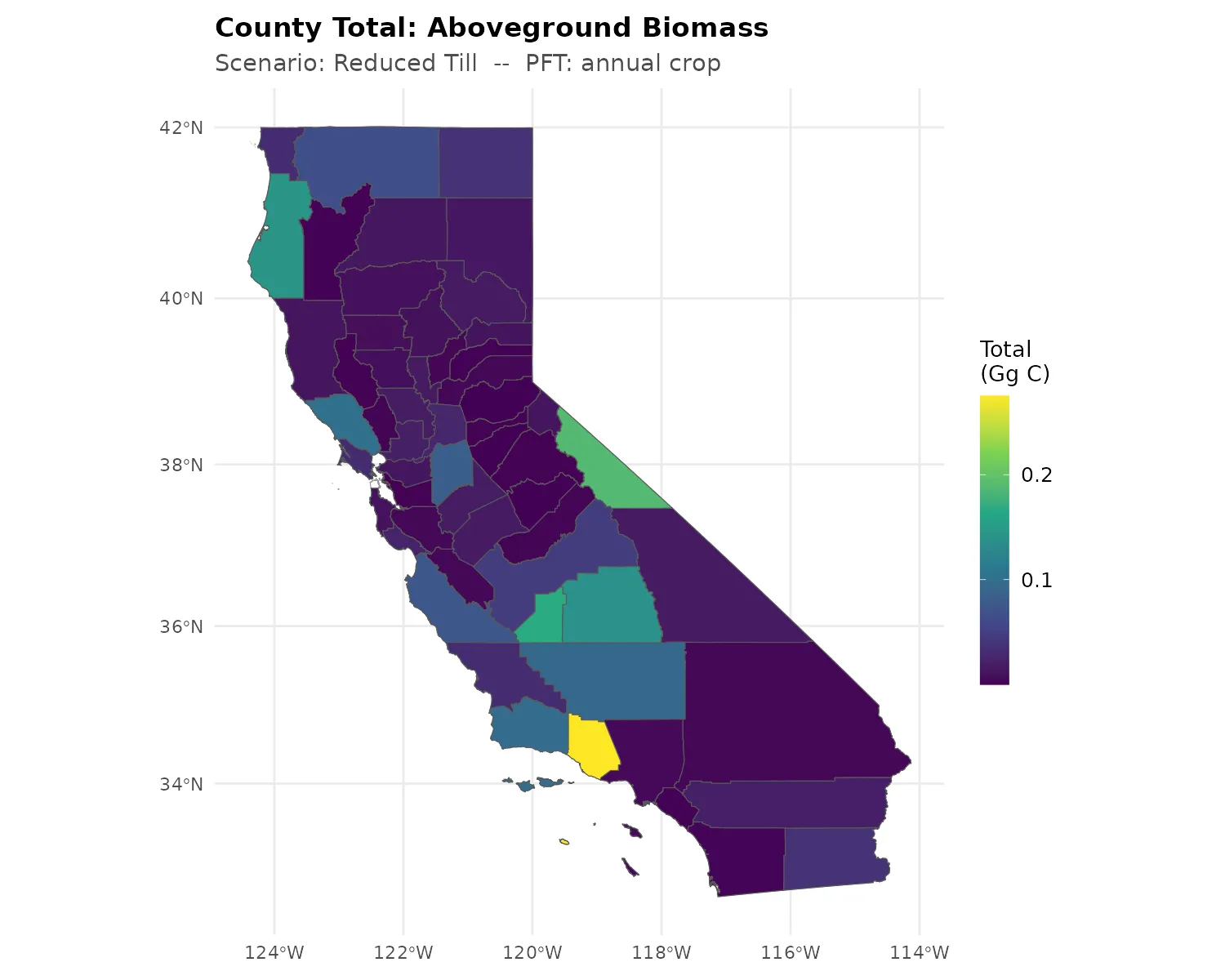
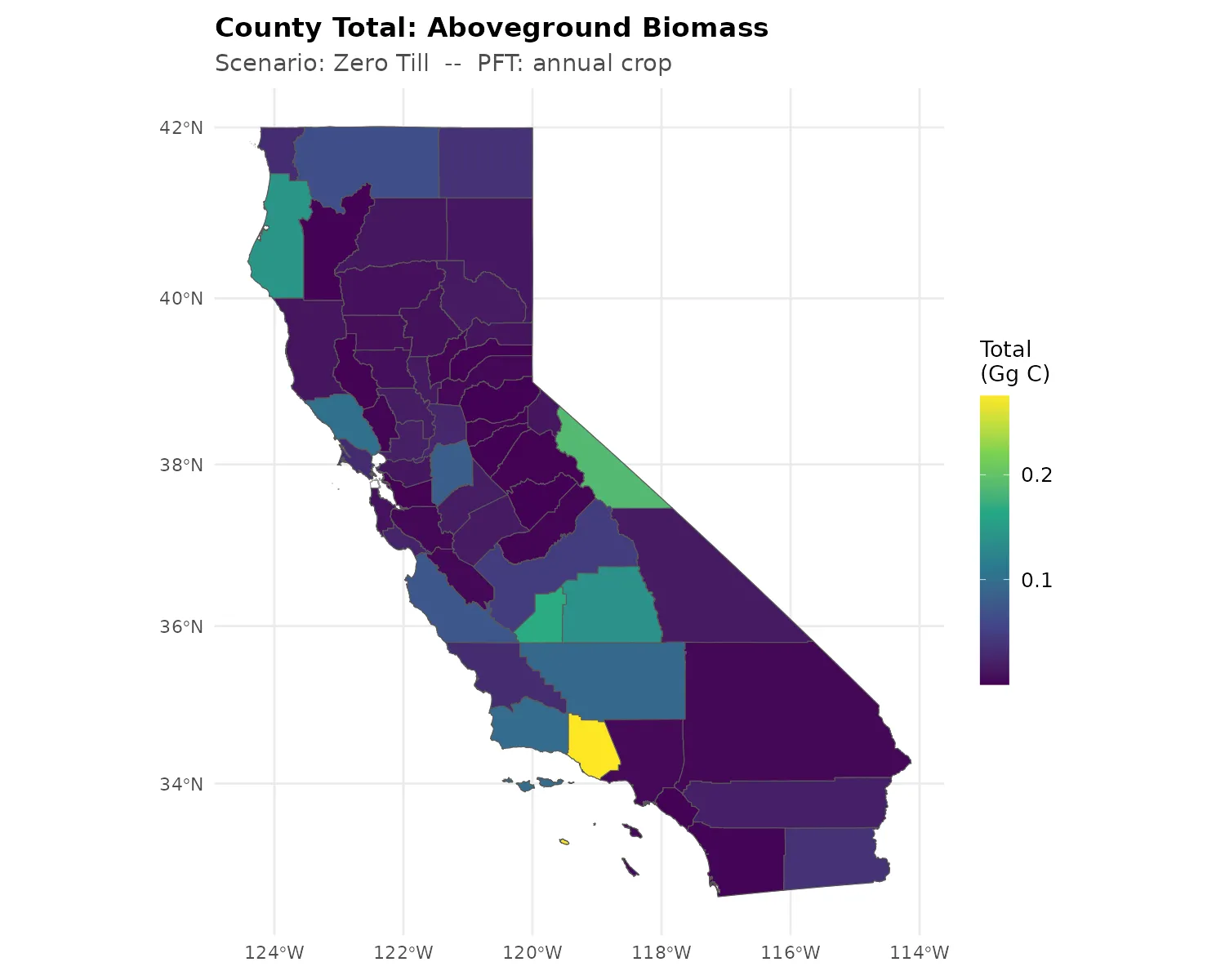
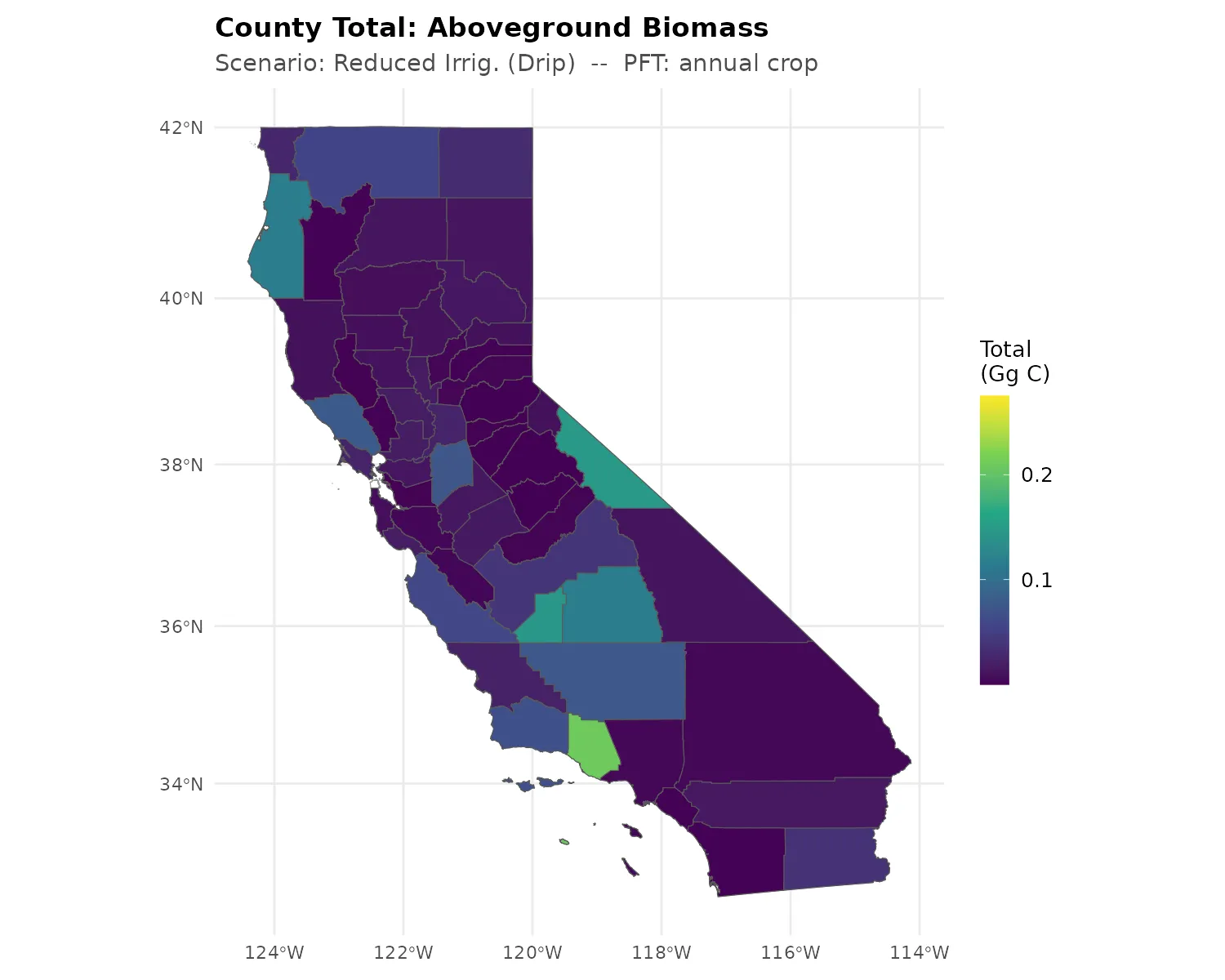
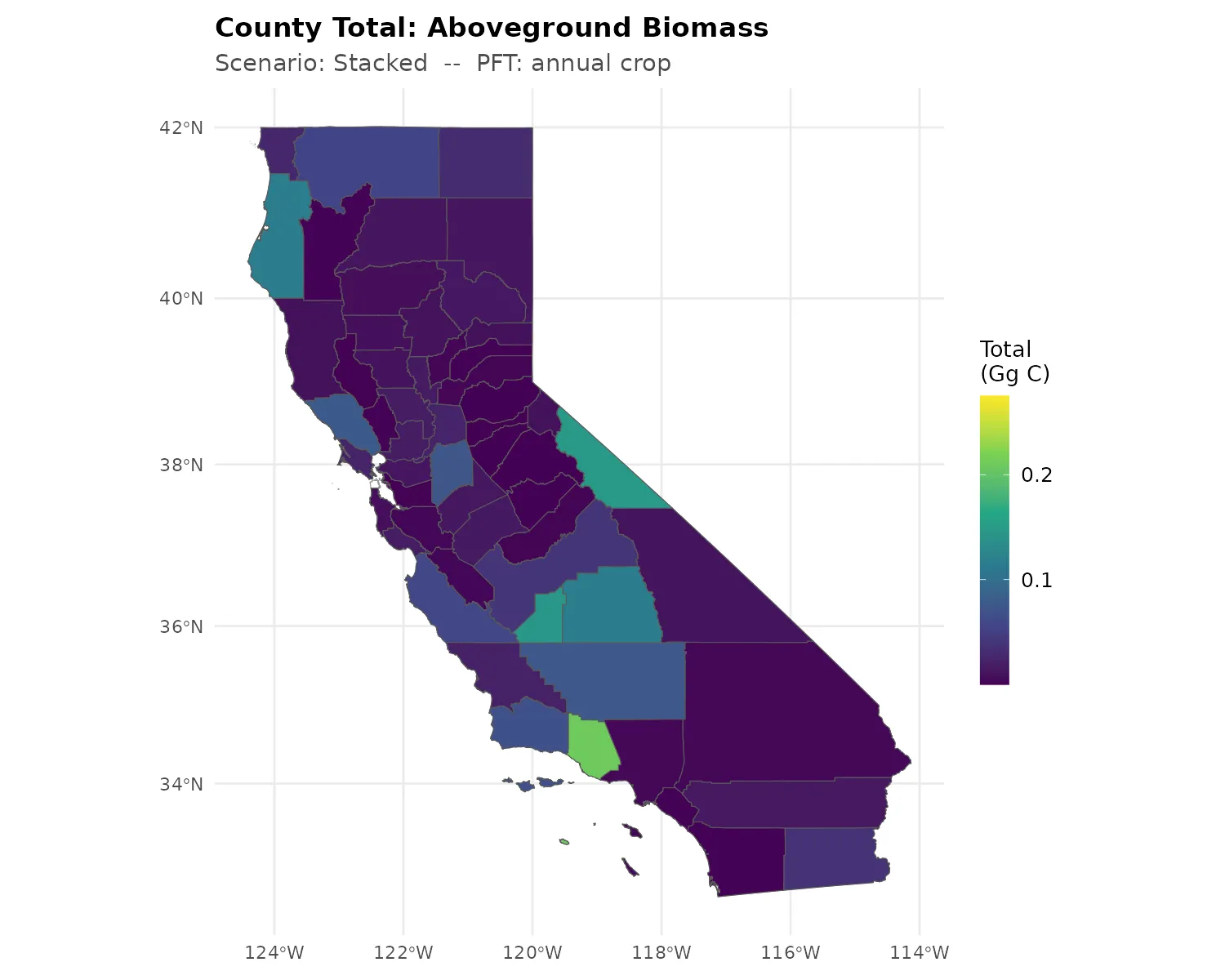
Individual AGB Difference Maps
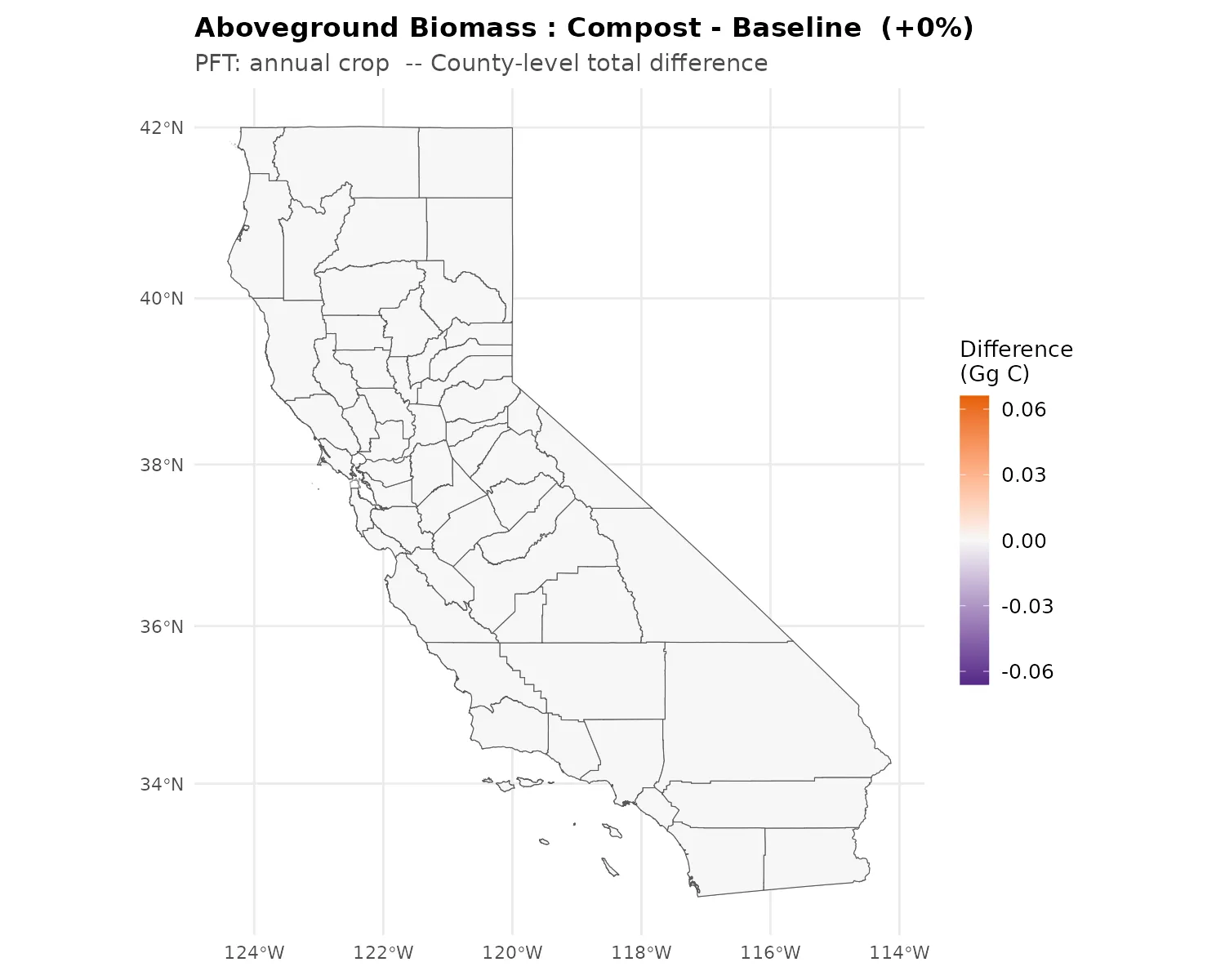
Field-Level AGB Density
All Scenarios
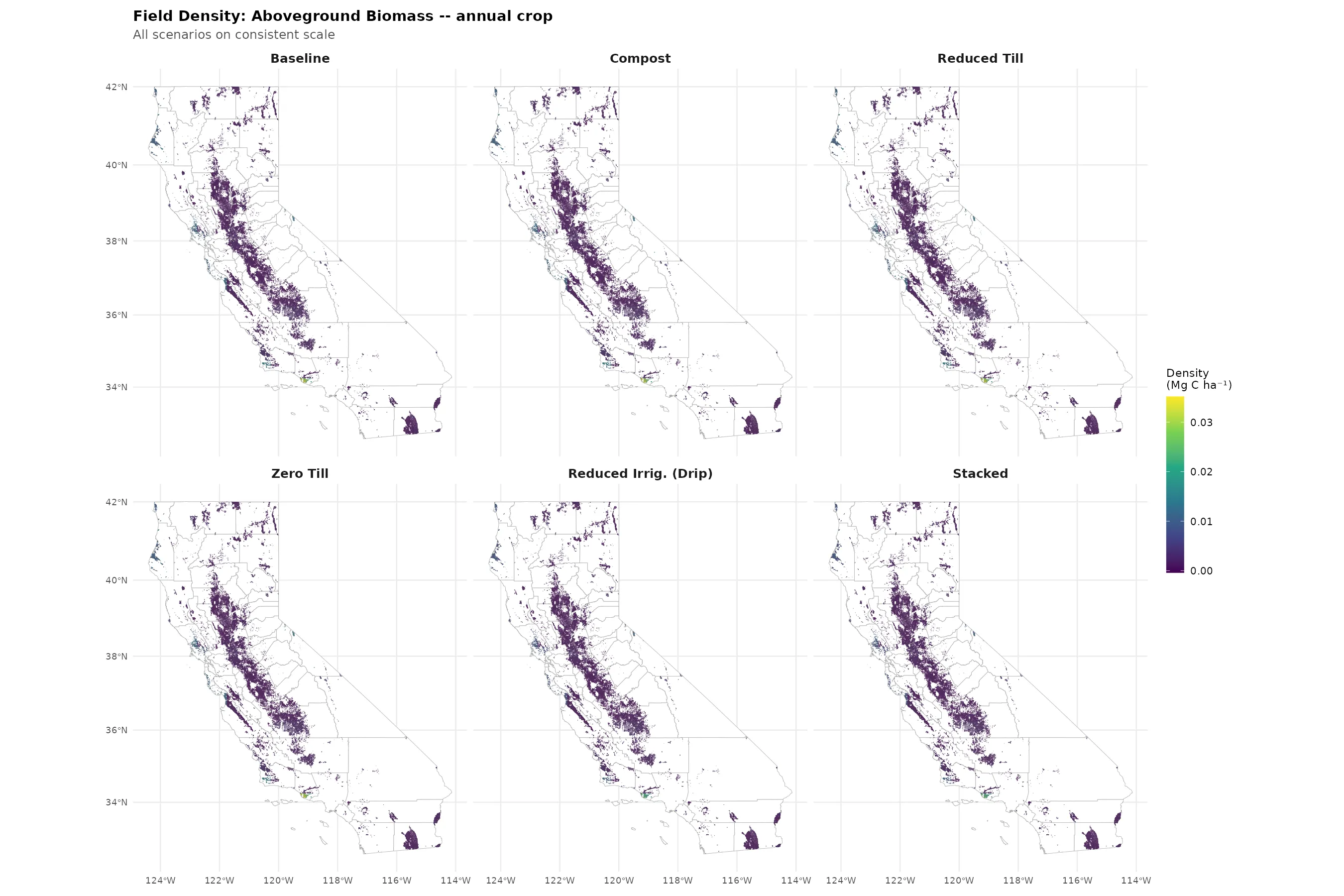
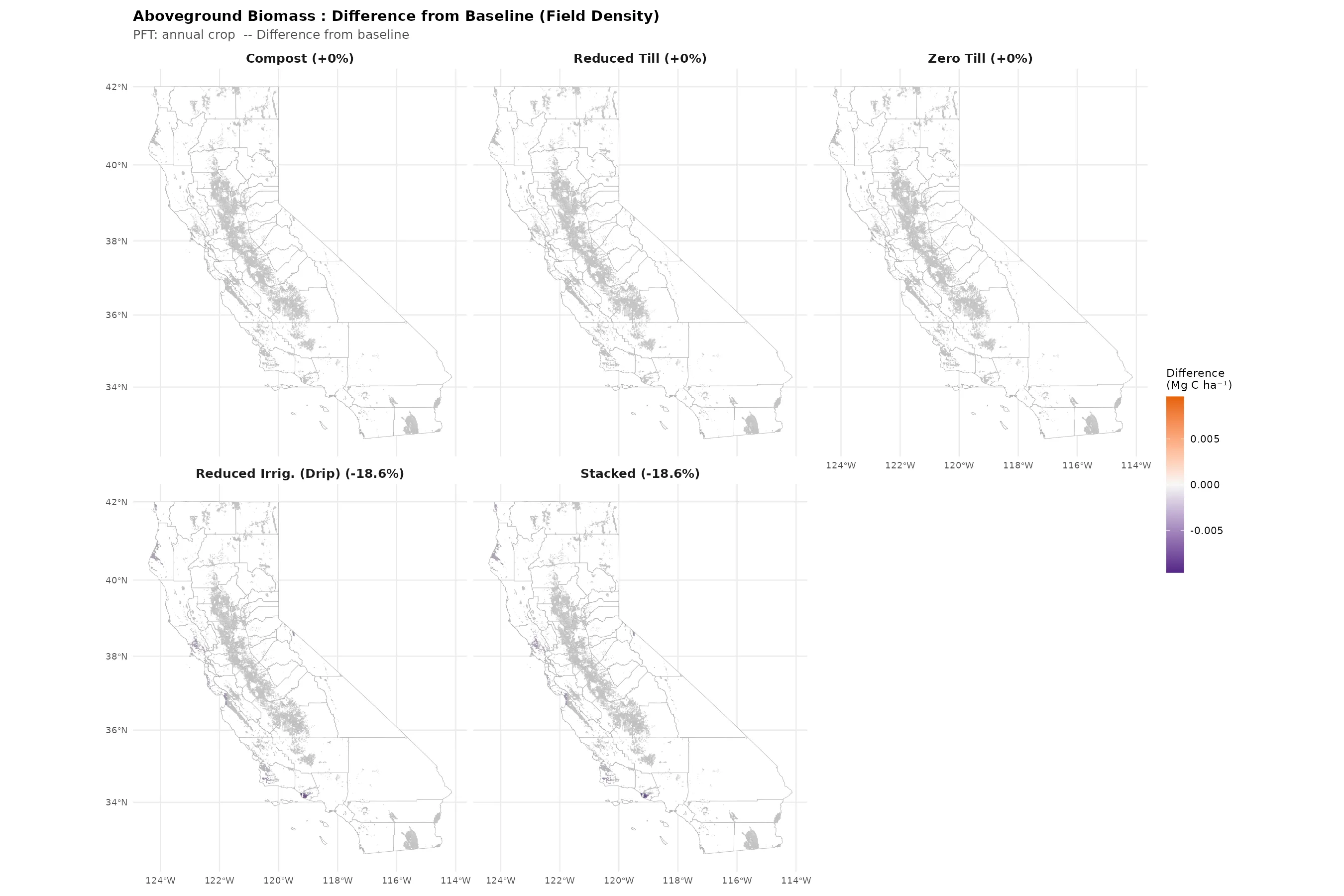
Individual Field AGB Maps